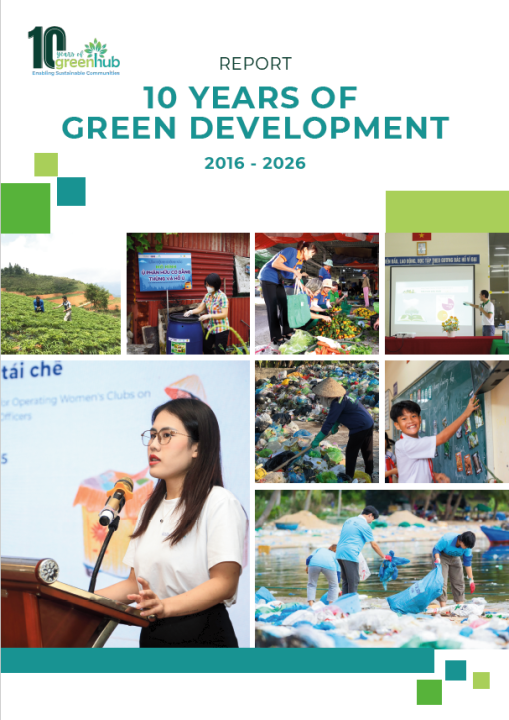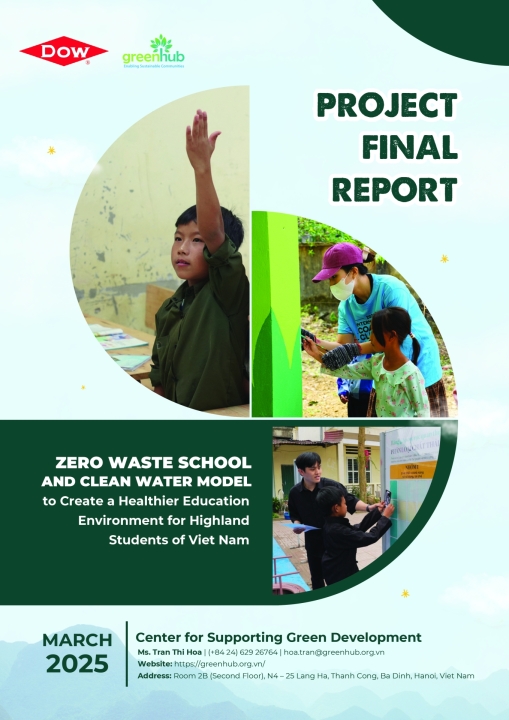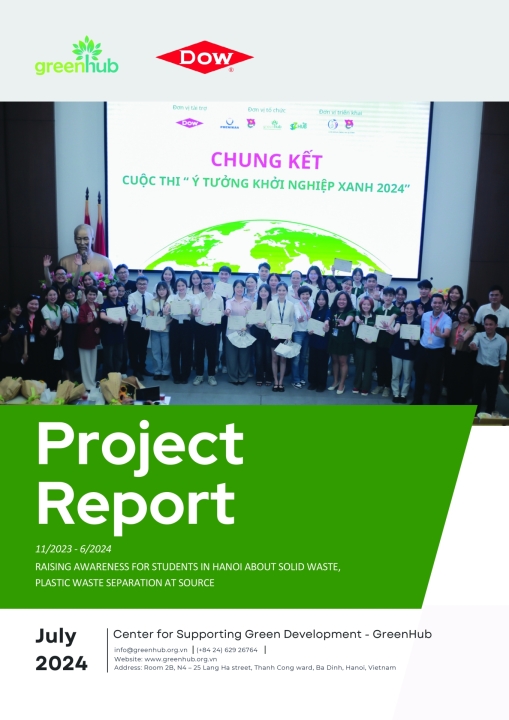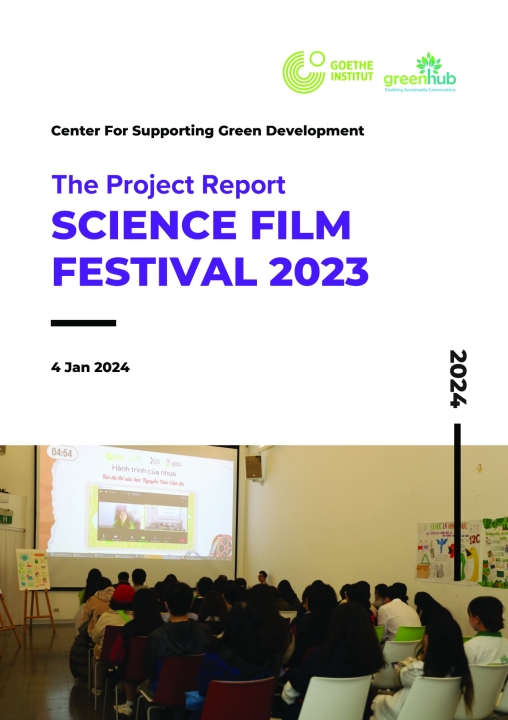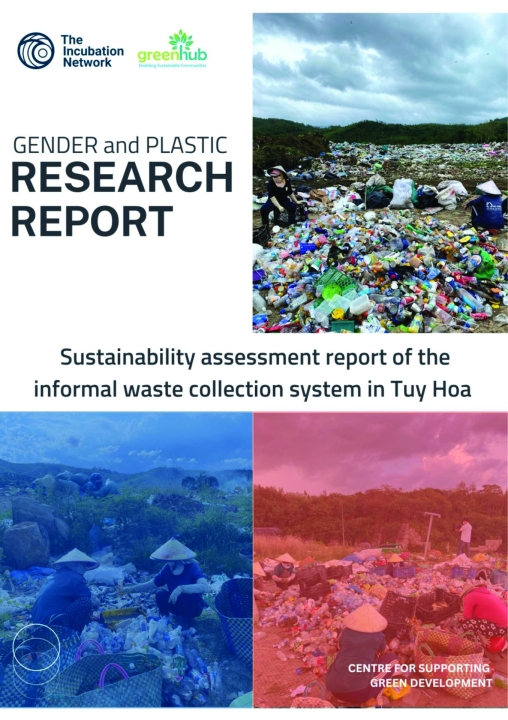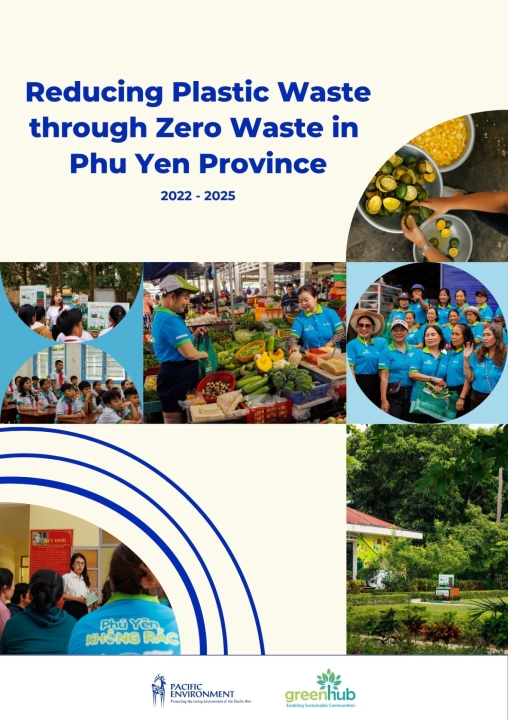



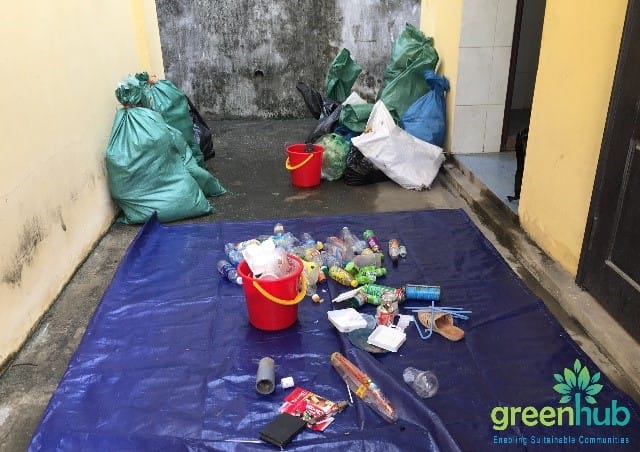
At the end of each day, inorganic waste generated by 58 households was collected at a designated location. The survey team, together with members of the Hong Gai Ward Women’s Union, carried out detailed sorting into 20 different waste categories.
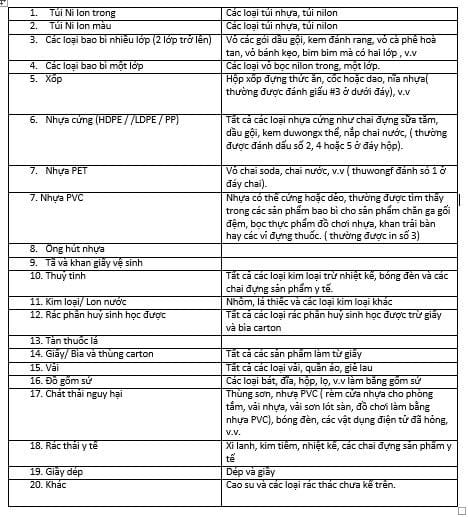
Specifically, at the collection point, the survey team and Women’s Union representatives conducted detailed sorting and weighed the total amount of waste collected from all 58 households in a single day.
After seven days of waste auditing, the expert team involved in the survey identified several preliminary findings as follows:
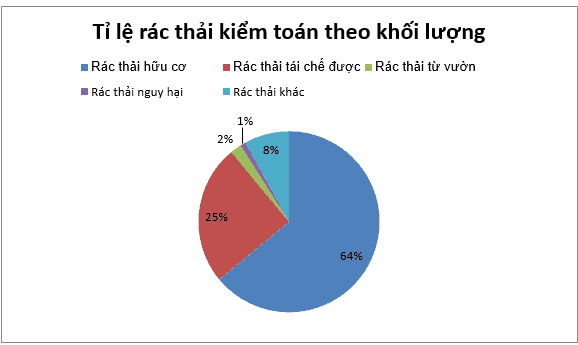
Waste Composition in the Average Household’s Total Domestic Waste
The results show that organic waste accounted for the largest proportion, at 64%. Recyclable waste made up 25%, garden waste accounted for 2%, and hazardous waste represented 1% of the total household waste generated.
Volume of Generated Waste
Plastic bags, packaging materials (both single-layer and multi-layer), and foam products accounted for approximately two-thirds of the total waste volume generated per household per day. Among these, colored plastic bags made up 16%, multi-layer packaging 21%, and single-layer packaging 19% of the total waste volume.
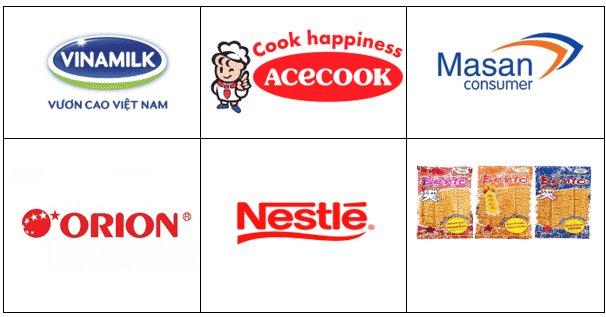
In addition to auditing waste weight and volume, the survey team also conducted a brand and packaging audit of household waste. A total of 1,200 packaging items were audited, identifying the major brands most commonly used by local residents.
On the afternoon of June 21, following the seven-day audit period, the survey team organized a rapid results briefing on the waste audit conducted in Hong Gai Ward. During the session, recommendations were shared with relevant stakeholders, and members of the ward Women’s Union were encouraged to continue these activities toward developing a model area for waste collection, waste separation, and environmental protection.