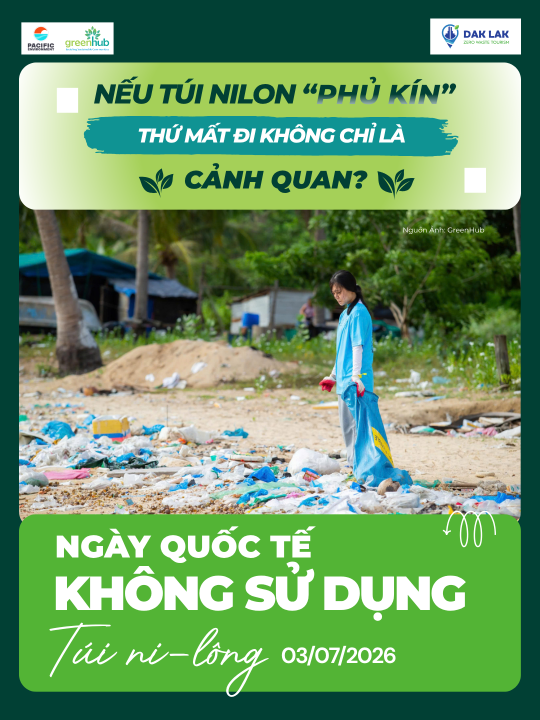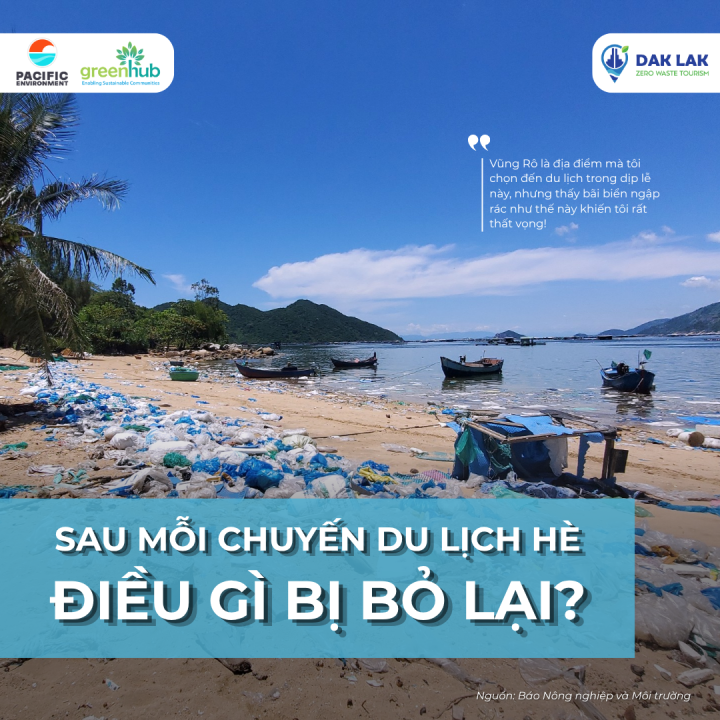



Many people often think that traveling for just a few days, using a couple of plastic cups, styrofoam boxes, or asking for an extra plastic bag to carry souvenirs won't matter much. In reality, these "few - minutes conveniences " are quietly accumulating into a massive environmental conundrum for travel destinations.
📝 According to statistics from the Institute for Tourism Development Research (now the Vietnam National Authority of Tourism), the amount of plastic waste generated by tourism activities is about 0.72 kg/day per overnight tourist and about 0.3 kg/day per day-tripper.
The report also warns of the severe impacts and consequences of plastic waste on tourism activities and environmental pollution. Specifically, while plastic waste from tourists stood at about 116,144 tons/year in 2019, without reduction measures, this figure is projected to triple by 2030, reaching approximately 336,400 tons/year.
According to a 2026 study conducted by the United Nations Development Programme (UNDP) in Ninh Binh and Da Nang, tourists are the primary source of waste, generating 1.7 to 3 times more plastic waste than local residents.
Evidently, the tourism industry is becoming a massive source of pressure, causing the volume of plastic waste to "grow" at a dizzying pace.
📝 Looking at the current reality at tourism destinations, the pressure is becoming increasingly visible. Specifically, Da Nang City: 1,100 tons of waste/day, with plastic waste accounting for 17%; Tuy Hoa City (Dak Lak - Old Phu Yen): 524 tons of waste/day, with plastic waste accounting for 18.31%; Rach Gia City (An Giang): 250 tons of waste/day, including 4.48 tons of solid waste discharged directly into the environment daily. Meanwhile, waste collection capacity and sorting infrastructure in many coastal areas have yet to keep pace with the "growth rate" of waste.
Tourism in Vietnam is growing stronger than ever, but it simultaneously poses a perplexing question: Are local tourism development and environmental protection two opposing forces holding each other back?
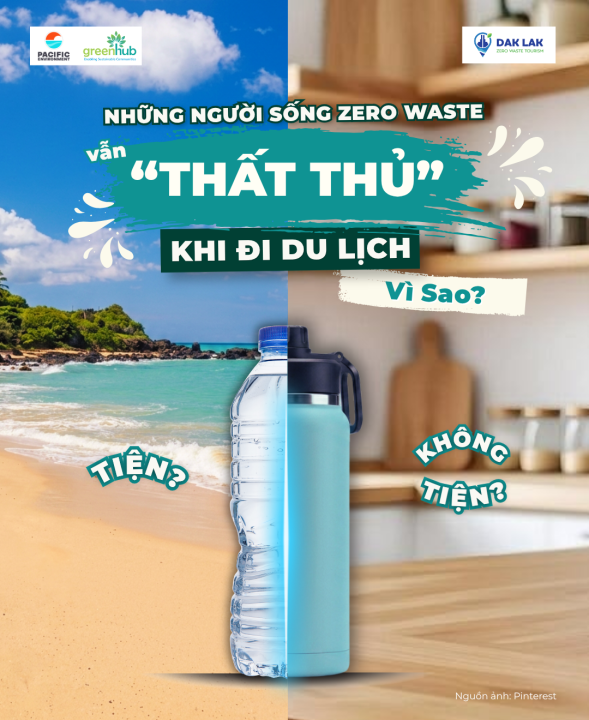
Many believe that maintaining a Zero Waste lifestyle means accepting inconvenience, whereas traveling demands comfort.
Is there a middle ground where we can fully experience the beauty of nature while minimizing our pressure on the environment?
What are your thoughts on this issue? Share them in the comments below, and don't forget to follow GreenHub for more upcoming posts on this topic! 🌱
------------
Sources:
Mission of the Tourism Sector (2024): https://bvhttdl.gov.vn/su-menh-nganh-du-lich-20240209082741799.htm
UNDP (2026) - Release of the Baseline Assessment of Plastic Pollution in Viet Nam’s Tourism Sector: https://www.undp.org/vietnam/press-releases/release-baseline-assessment-plastic-pollution-viet-nams-tourism-sector
#DakLakZeroWasteTourism